Industry
Sovereign AI for pharma & life sciences
AI over IP-critical research that never leaves your perimeter, owned, air-gapped, and trained on your science.
By James Drayson
In short
Sovereign AI for pharma and life sciences is a model the organisation owns and runs inside its own perimeter, trained on its proprietary research and trial data, so IP-critical science never reaches a third party. It is the same approach Locai took with First Light Fusion, the Oxford University fusion spinout.
The IP problem in life sciences
In pharma and life sciences, the most valuable asset is unpublished research, compounds, trial data, and methods. Sending that to a general AI API means exposing your core IP to a third party, an unacceptable risk in a field where research advantage is everything.
Why public APIs fail here
- IP leakage: Proprietary research sent to an external model leaves your control.
- No air-gap: The most sensitive R&D environments can't call external APIs.
- Generic knowledge: A general model doesn't know your science or pipeline.
What owned AI enables in pharma
- Air-gapped R&D: Reason over confidential science on fully isolated infrastructure.
- Trained on your science: A model post-trained on your papers, datasets, and lab knowledge.
- Owned IP: The model, weights, and outputs belong to you, protecting research advantage.
What this looks like with Locai
In a regulated sector the hard part is rarely the technology; it is procurement, deployment and accountability. A single owned machine simplifies all three.
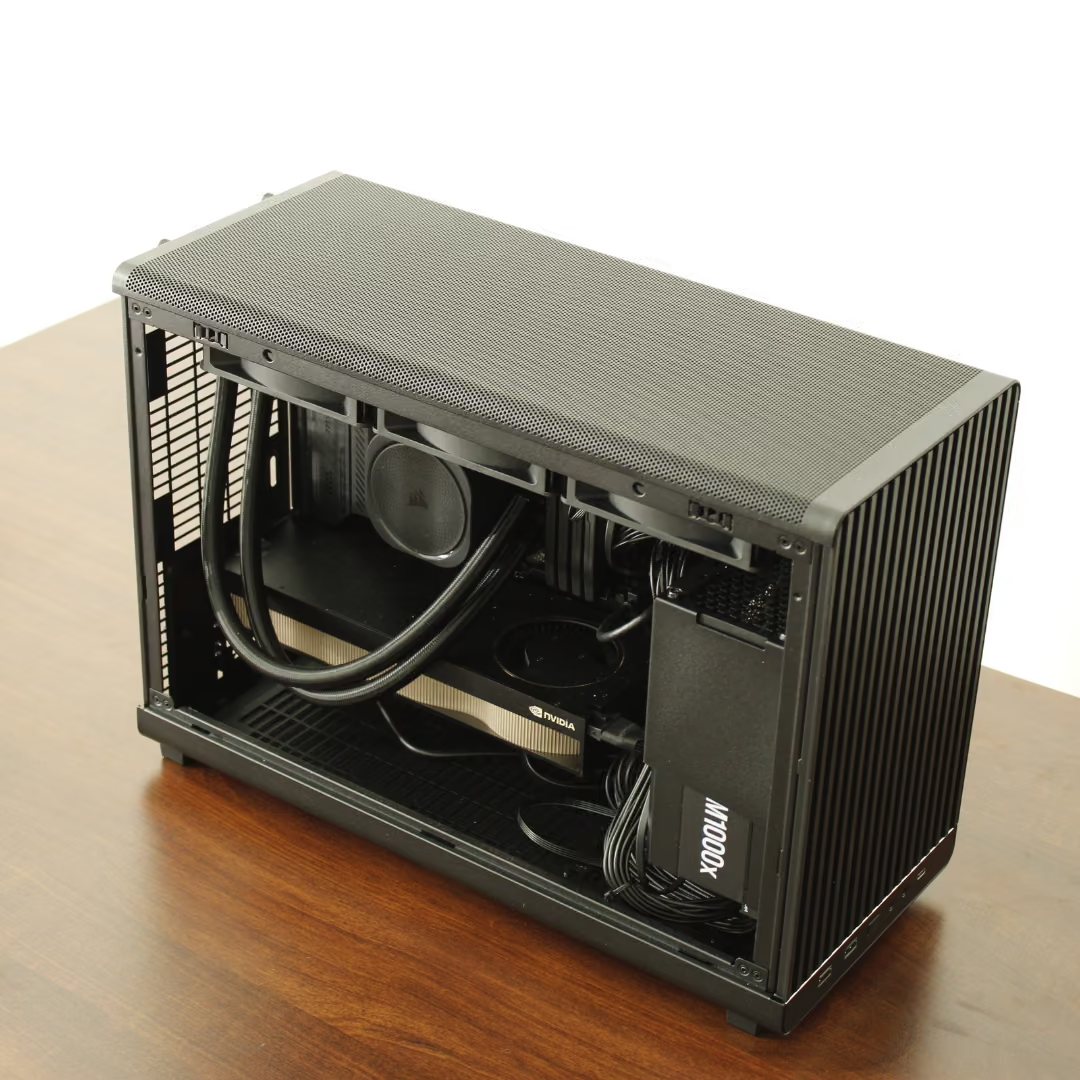
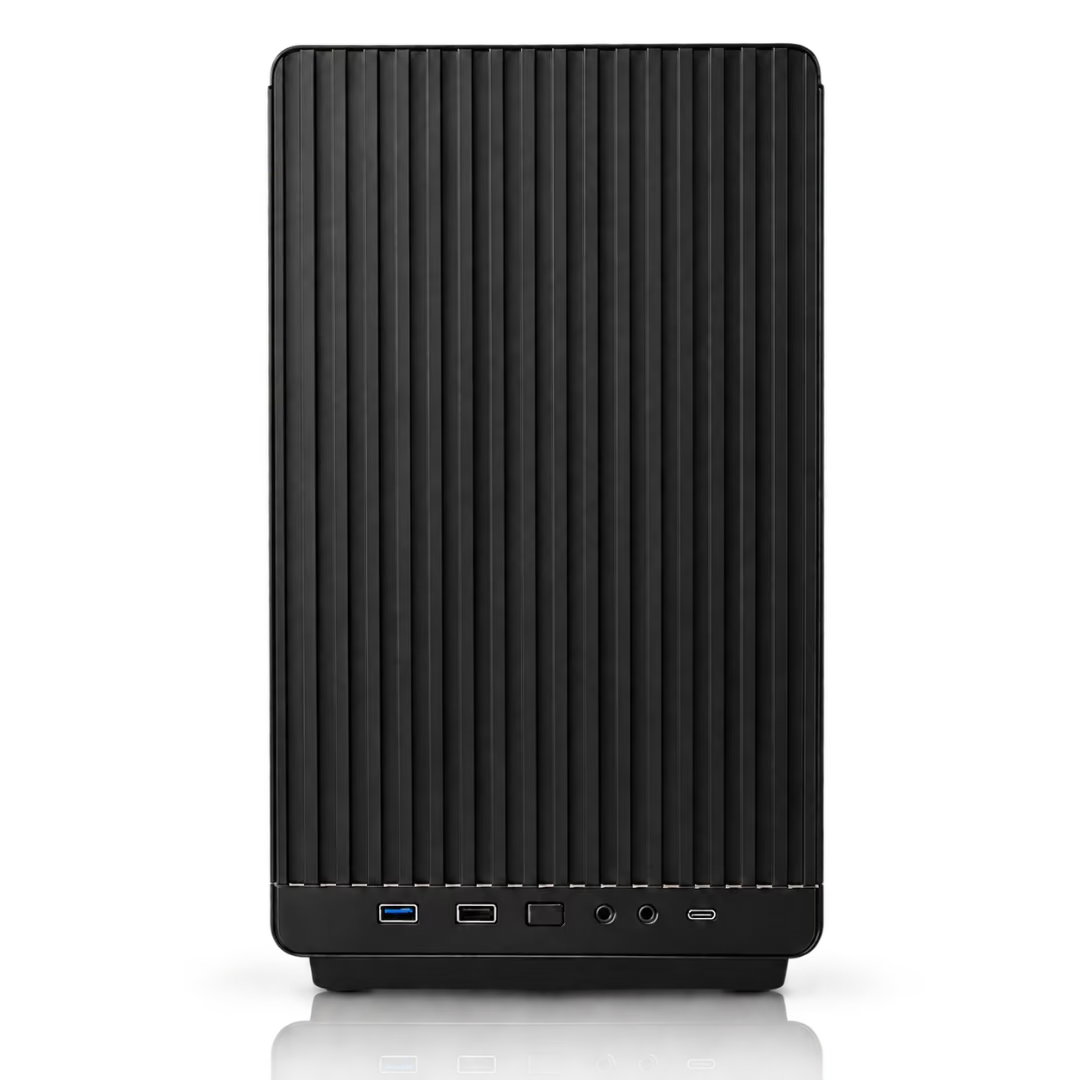
Locai Labs builds Locai One, an on-prem AI appliance. It is one machine that arrives with everything already in it: the hardware, our open-weight Locai Juno models, and Locai OS, the operating system that serves the models and handles users, access and monitoring. You plug it into a mains socket and your network, and your team is working in about 15 minutes. No cloud account, no per-token bill, and nothing leaving the building.
The reason a data-centre-class model fits in a box on your floor is SPACE, our compression algorithm. Instead of asking how much of a model can be cut while keeping it broadly similar, SPACE asks what the model needs to be good at, preserves the subnetworks behind those capabilities and strips back the rest. The result is a smaller specialist rather than a shrunken generalist, tuned to the exact hardware it ships on.
Locai One starts at £29,950 for a team, and Locai One Pro at £49,950 for an organisation, bought once and owned outright. Both run air-cooled on standard mains power and work fully air-gapped. Any compatible open-weight model runs alongside Juno, and if you need a model trained on your own proprietary data we can post-train one and deploy it on the same machine.
Frequently asked questions
Is AI safe for confidential research?
When the model is owned and runs inside your perimeter (or air-gapped), proprietary research never leaves your control, unlike a hosted API.
Can it run air-gapped for R&D?
Yes. Air-gapped deployment is ideal for IP-critical science, and is how Locai supports research-intensive customers.
Can it be trained on our science?
Yes, the model is post-trained on your papers, datasets, and lab knowledge so it reasons in your domain.
Who has done this already?
Locai Labs built FLF Coder for First Light Fusion, an Oxford University fusion spinout: a domain-specific coding model deployed air-gapped and post-trained on their scientific and engineering workflows.
Book a sovereign AI briefing
A 30-minute session on owning your model: deployment options, the data path, and a clear cost range for your use case.